
Turning Your AR Process into a Cash Flow Engine

Most small business owners in the United States eventually hit a point where the numbers stop being simple. The topic of turning your ar process into a cash flow engine sits at the center of that challenge for many US small business owners looking for better accounts receivable process and real fractional CFO support. Cash is the oxygen of a small business. Profit on paper does not pay payroll, rent, or suppliers. Many owners discover this the hard way when a big receivable is late or when inventory purchases stack up faster than sales convert. A living 13-week cash flow forecast forces the real timing of inflows and outflows into the open. You list expected collections by week, known bills, payroll, tax payments, and planned investments. The first time you build one honestly, gaps usually appear that the annual budget never showed. Once the forecast exists, the weekly habit of updating it takes less time than most people expect and pays for itself in avoided crises. Late-paying customers become visible early enough to start collection steps. Large purchases can be timed against known inflows. Hiring decisions can be tested against the cash runway instead of pure optimism. For e-commerce and inventory businesses the same tool highlights the cash locked in stock and the benefit of faster turns. Service firms see the impact of project billing terms and deposit practices. The goal is not perfect prediction. The goal is fewer surprises and more deliberate choices. This is exactly the kind of cash flow discipline a fractional CFO installs so you stop managing by bank balance alone. Executive-level guidance means someone who has seen the patterns before can help you interpret the numbers and push back on plans that look good on a slide but will strain cash or margin. That is the difference between basic accounting support and true outsourced CFO work. When the numbers need to become clearer and more actionable, book a confidential strategy call. In practice the companies that install these habits earliest tend to raise capital on better terms when they need it, negotiate with suppliers from a position of knowledge, and avoid the expensive scramble that comes from discovering problems only when cash is already tight. The work is not glamorous. It is consistent and specific. But the compounding effect on decision quality is real. To see how bookkeeping, 13-week forecasting, KPI dashboards, and proactive tax strategy connect under one roof, visit the SmallBiz CFO Program page or book a confidential strategy call.
The Quiet Cash Drain of Overstock and Slow Inventory

Founders are used to making decisions with incomplete information. Strong financial systems reduce how incomplete that information is. The topic of the quiet cash drain of overstock and slow inventory sits at the center of that challenge for many US small business owners looking for better inventory cash flow and real fractional CFO support. Cash is the oxygen of a small business. Profit on paper does not pay payroll, rent, or suppliers. Many owners discover this the hard way when a big receivable is late or when inventory purchases stack up faster than sales convert. A living 13-week cash flow forecast forces the real timing of inflows and outflows into the open. You list expected collections by week, known bills, payroll, tax payments, and planned investments. The first time you build one honestly, gaps usually appear that the annual budget never showed. Once the forecast exists, the weekly habit of updating it takes less time than most people expect and pays for itself in avoided crises. Late-paying customers become visible early enough to start collection steps. Large purchases can be timed against known inflows. Hiring decisions can be tested against the cash runway instead of pure optimism. For e-commerce and inventory businesses the same tool highlights the cash locked in stock and the benefit of faster turns. Service firms see the impact of project billing terms and deposit practices. The goal is not perfect prediction. The goal is fewer surprises and more deliberate choices. This is exactly the kind of cash flow discipline a fractional CFO installs so you stop managing by bank balance alone. KPI dashboards only help when they are simple enough that you actually open them. The useful ones track a short list of drivers: cash position, gross margin, receivables aging, and the metrics that matter most in your specific model. The SmallBiz CFO Program builds exactly that kind of focused reporting. Financial clarity is not a luxury reserved for large companies. It is a practical operating system that smaller teams can install and keep running. Start the conversation by choosing to book a confidential strategy call. In practice the companies that install these habits earliest tend to raise capital on better terms when they need it, negotiate with suppliers from a position of knowledge, and avoid the expensive scramble that comes from discovering problems only when cash is already tight. The work is not glamorous. It is consistent and specific. But the compounding effect on decision quality is real. To see how bookkeeping, 13-week forecasting, KPI dashboards, and proactive tax strategy connect under one roof, visit the SmallBiz CFO Program page or book a confidential strategy call.
How to Use Cash Flow Forecasts to Make Hiring Decisions
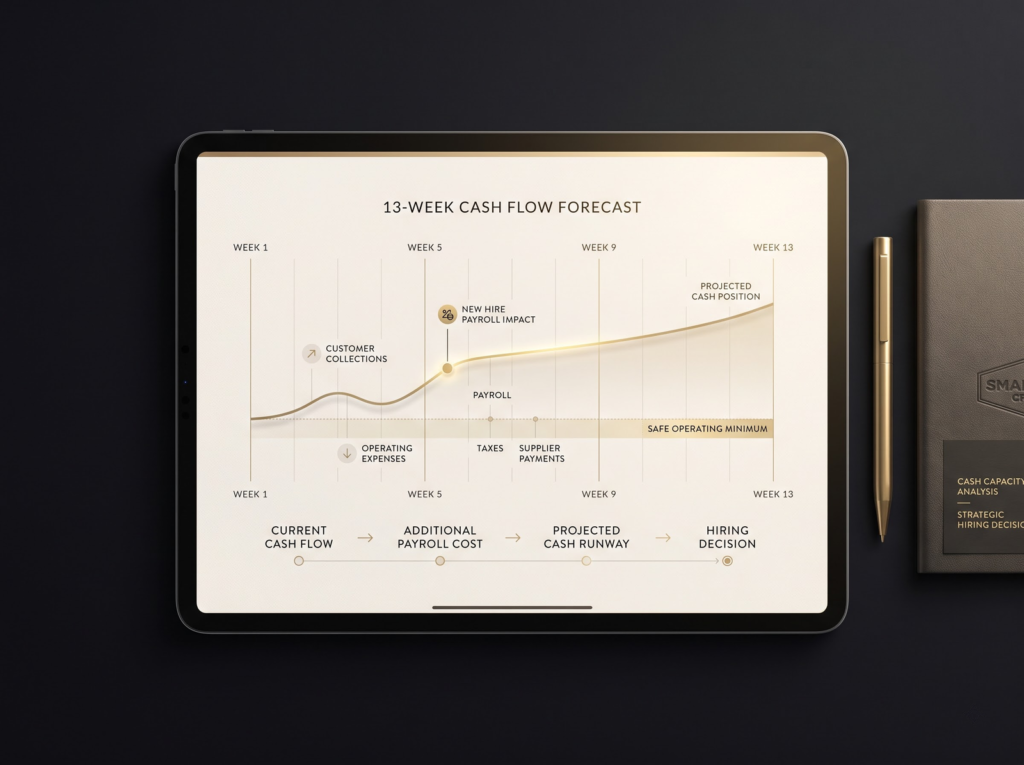
The difference between businesses that scale cleanly and those that constantly scramble often comes down to financial visibility. The topic of how to use cash flow forecasts to make hiring decisions sits at the center of that challenge for many US small business owners looking for better cash flow hiring decisions and real fractional CFO support. Cash is the oxygen of a small business. Profit on paper does not pay payroll, rent, or suppliers. Many owners discover this the hard way when a big receivable is late or when inventory purchases stack up faster than sales convert. A living 13-week cash flow forecast forces the real timing of inflows and outflows into the open. You list expected collections by week, known bills, payroll, tax payments, and planned investments. The first time you build one honestly, gaps usually appear that the annual budget never showed. Once the forecast exists, the weekly habit of updating it takes less time than most people expect and pays for itself in avoided crises. Late-paying customers become visible early enough to start collection steps. Large purchases can be timed against known inflows. Hiring decisions can be tested against the cash runway instead of pure optimism. For e-commerce and inventory businesses the same tool highlights the cash locked in stock and the benefit of faster turns. Service firms see the impact of project billing terms and deposit practices. The goal is not perfect prediction. The goal is fewer surprises and more deliberate choices. This is exactly the kind of cash flow discipline a fractional CFO installs so you stop managing by bank balance alone. A practical 13-week cash flow forecast changes the conversation. Instead of reacting when the bank balance gets low, you see the pressure points weeks ahead and can act while you still have options. This is a core deliverable inside the SmallBiz CFO Program. When the numbers need to become clearer and more actionable, book a confidential strategy call. In practice the companies that install these habits earliest tend to raise capital on better terms when they need it, negotiate with suppliers from a position of knowledge, and avoid the expensive scramble that comes from discovering problems only when cash is already tight. The work is not glamorous. It is consistent and specific. But the compounding effect on decision quality is real. To see how bookkeeping, 13-week forecasting, KPI dashboards, and proactive tax strategy connect under one roof, visit the SmallBiz CFO Program page or book a confidential strategy call.
Seasonal Cash Flow Planning for US Small Businesses
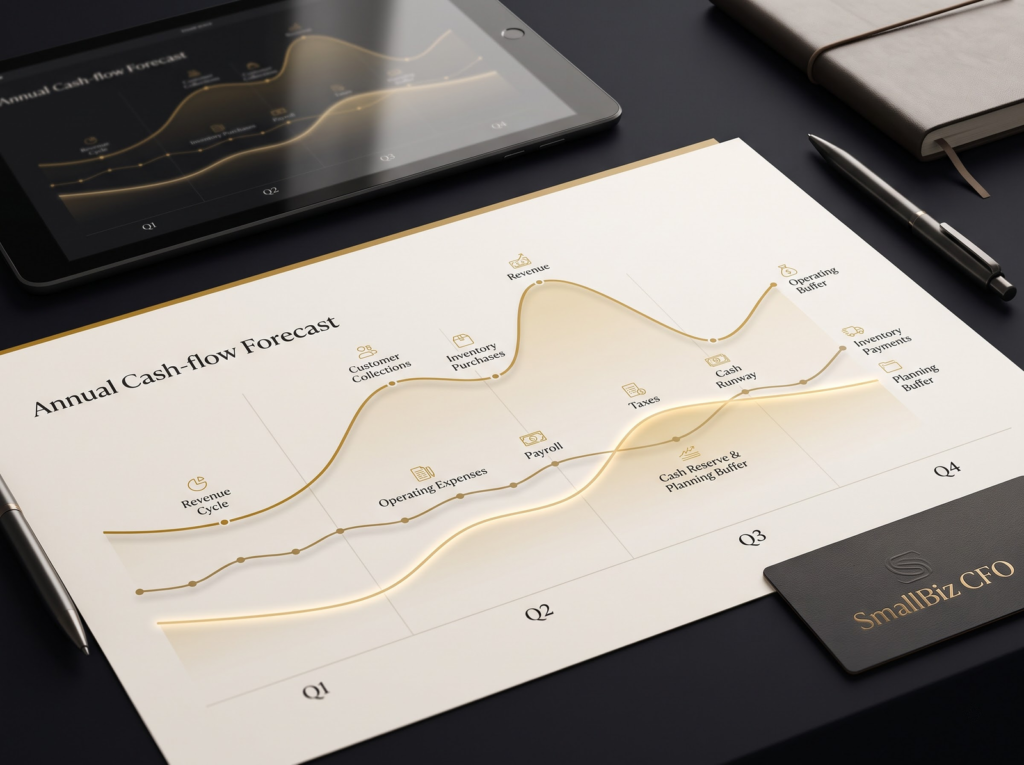
Founders are used to making decisions with incomplete information. Strong financial systems reduce how incomplete that information is. The topic of seasonal cash flow planning for us small businesses sits at the center of that challenge for many US small business owners looking for better seasonal cash flow planning and real fractional CFO support. Cash is the oxygen of a small business. Profit on paper does not pay payroll, rent, or suppliers. Many owners discover this the hard way when a big receivable is late or when inventory purchases stack up faster than sales convert. A living 13-week cash flow forecast forces the real timing of inflows and outflows into the open. You list expected collections by week, known bills, payroll, tax payments, and planned investments. The first time you build one honestly, gaps usually appear that the annual budget never showed. Once the forecast exists, the weekly habit of updating it takes less time than most people expect and pays for itself in avoided crises. Late-paying customers become visible early enough to start collection steps. Large purchases can be timed against known inflows. Hiring decisions can be tested against the cash runway instead of pure optimism. For e-commerce and inventory businesses the same tool highlights the cash locked in stock and the benefit of faster turns. Service firms see the impact of project billing terms and deposit practices. The goal is not perfect prediction. The goal is fewer surprises and more deliberate choices. This is exactly the kind of cash flow discipline a fractional CFO installs so you stop managing by bank balance alone. Executive-level guidance means someone who has seen the patterns before can help you interpret the numbers and push back on plans that look good on a slide but will strain cash or margin. That is the difference between basic accounting support and true outsourced CFO work. When the numbers need to become clearer and more actionable, book a confidential strategy call. In practice the companies that install these habits earliest tend to raise capital on better terms when they need it, negotiate with suppliers from a position of knowledge, and avoid the expensive scramble that comes from discovering problems only when cash is already tight. The work is not glamorous. It is consistent and specific. But the compounding effect on decision quality is real. To see how bookkeeping, 13-week forecasting, KPI dashboards, and proactive tax strategy connect under one roof, visit the SmallBiz CFO Program page or book a confidential strategy call.
Managing Cash Flow When Customers Pay Late
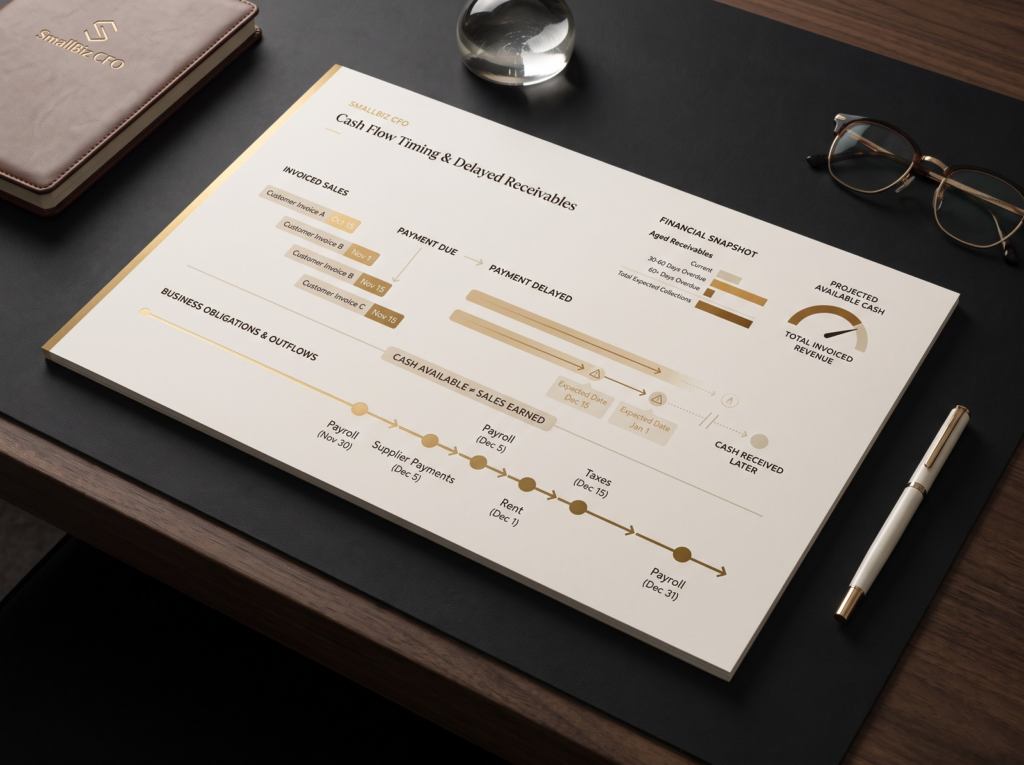
The difference between businesses that scale cleanly and those that constantly scramble often comes down to financial visibility. The topic of managing cash flow when customers pay late sits at the center of that challenge for many US small business owners looking for better accounts receivable cash flow and real fractional CFO support. Cash is the oxygen of a small business. Profit on paper does not pay payroll, rent, or suppliers. Many owners discover this the hard way when a big receivable is late or when inventory purchases stack up faster than sales convert. A living 13-week cash flow forecast forces the real timing of inflows and outflows into the open. You list expected collections by week, known bills, payroll, tax payments, and planned investments. The first time you build one honestly, gaps usually appear that the annual budget never showed. Once the forecast exists, the weekly habit of updating it takes less time than most people expect and pays for itself in avoided crises. Late-paying customers become visible early enough to start collection steps. Large purchases can be timed against known inflows. Hiring decisions can be tested against the cash runway instead of pure optimism. For e-commerce and inventory businesses the same tool highlights the cash locked in stock and the benefit of faster turns. Service firms see the impact of project billing terms and deposit practices. The goal is not perfect prediction. The goal is fewer surprises and more deliberate choices. This is exactly the kind of cash flow discipline a fractional CFO installs so you stop managing by bank balance alone. Proactive tax strategy is not about aggressive loopholes. It is about timing, entity structure, available credits, and making sure estimated payments and multi-state obligations do not create ugly surprises. This sits alongside cash flow forecasting and KPI reporting in a complete fractional CFO engagement. Financial clarity is not a luxury reserved for large companies. It is a practical operating system that smaller teams can install and keep running. Start the conversation by choosing to book a confidential strategy call. In practice the companies that install these habits earliest tend to raise capital on better terms when they need it, negotiate with suppliers from a position of knowledge, and avoid the expensive scramble that comes from discovering problems only when cash is already tight. The work is not glamorous. It is consistent and specific. But the compounding effect on decision quality is real. To see how bookkeeping, 13-week forecasting, KPI dashboards, and proactive tax strategy connect under one roof, visit the SmallBiz CFO Program page or book a confidential strategy call.
Building a Cash Reserve That Actually Protects Your Business
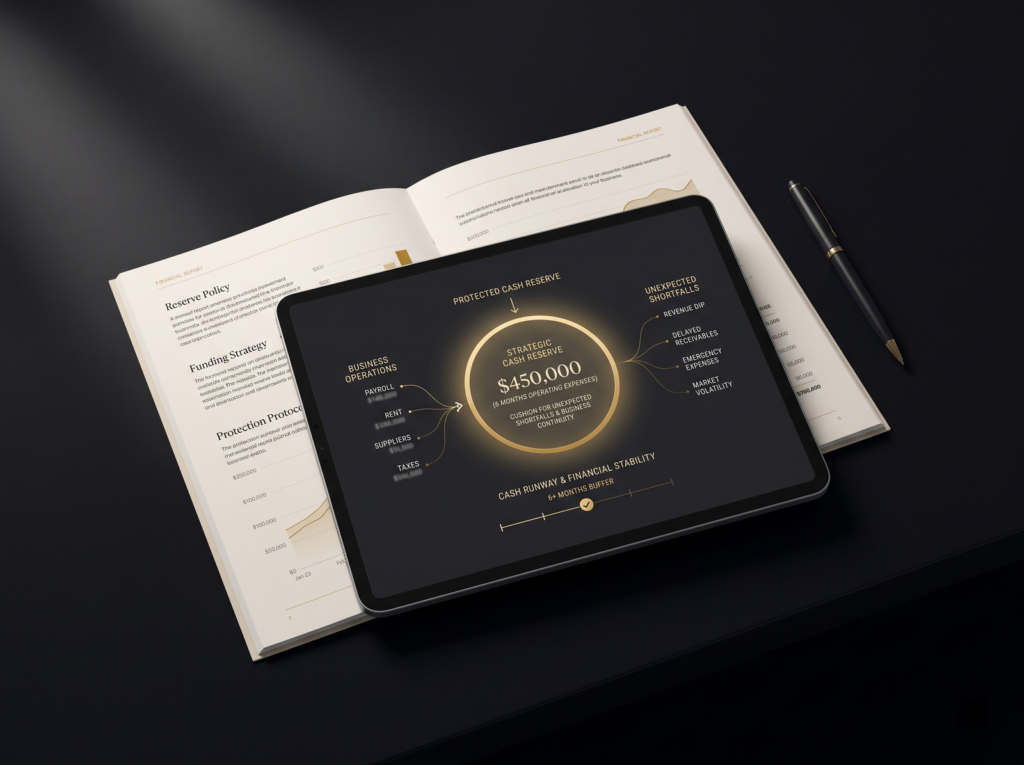
The difference between businesses that scale cleanly and those that constantly scramble often comes down to financial visibility. The topic of building a cash reserve that actually protects your business sits at the center of that challenge for many US small business owners looking for better business cash reserve and real fractional CFO support. Cash is the oxygen of a small business. Profit on paper does not pay payroll, rent, or suppliers. Many owners discover this the hard way when a big receivable is late or when inventory purchases stack up faster than sales convert. A living 13-week cash flow forecast forces the real timing of inflows and outflows into the open. You list expected collections by week, known bills, payroll, tax payments, and planned investments. The first time you build one honestly, gaps usually appear that the annual budget never showed. Once the forecast exists, the weekly habit of updating it takes less time than most people expect and pays for itself in avoided crises. Late-paying customers become visible early enough to start collection steps. Large purchases can be timed against known inflows. Hiring decisions can be tested against the cash runway instead of pure optimism. For e-commerce and inventory businesses the same tool highlights the cash locked in stock and the benefit of faster turns. Service firms see the impact of project billing terms and deposit practices. The goal is not perfect prediction. The goal is fewer surprises and more deliberate choices. This is exactly the kind of cash flow discipline a fractional CFO installs so you stop managing by bank balance alone. Clean books are the foundation. Without accurate, timely records, every forecast and every tax plan sits on shaky ground. That is why the SmallBiz CFO Program starts with getting the data right and keeping it right every month. Financial clarity is not a luxury reserved for large companies. It is a practical operating system that smaller teams can install and keep running. Start the conversation by choosing to book a confidential strategy call. In practice the companies that install these habits earliest tend to raise capital on better terms when they need it, negotiate with suppliers from a position of knowledge, and avoid the expensive scramble that comes from discovering problems only when cash is already tight. The work is not glamorous. It is consistent and specific. But the compounding effect on decision quality is real. To see how bookkeeping, 13-week forecasting, KPI dashboards, and proactive tax strategy connect under one roof, visit the SmallBiz CFO Program page or book a confidential strategy call.
Cash Flow vs Profit: The Difference That Keeps Owners Awake at Night

The difference between businesses that scale cleanly and those that constantly scramble often comes down to financial visibility. The topic of cash flow vs profit: the difference that keeps owners awake at night sits at the center of that challenge for many US small business owners looking for better cash flow vs profit and real fractional CFO support. Cash is the oxygen of a small business. Profit on paper does not pay payroll, rent, or suppliers. Many owners discover this the hard way when a big receivable is late or when inventory purchases stack up faster than sales convert. A living 13-week cash flow forecast forces the real timing of inflows and outflows into the open. You list expected collections by week, known bills, payroll, tax payments, and planned investments. The first time you build one honestly, gaps usually appear that the annual budget never showed. Once the forecast exists, the weekly habit of updating it takes less time than most people expect and pays for itself in avoided crises. Late-paying customers become visible early enough to start collection steps. Large purchases can be timed against known inflows. Hiring decisions can be tested against the cash runway instead of pure optimism. For e-commerce and inventory businesses the same tool highlights the cash locked in stock and the benefit of faster turns. Service firms see the impact of project billing terms and deposit practices. The goal is not perfect prediction. The goal is fewer surprises and more deliberate choices. This is exactly the kind of cash flow discipline a fractional CFO installs so you stop managing by bank balance alone. KPI dashboards only help when they are simple enough that you actually open them. The useful ones track a short list of drivers: cash position, gross margin, receivables aging, and the metrics that matter most in your specific model. The SmallBiz CFO Program builds exactly that kind of focused reporting. When the numbers need to become clearer and more actionable, book a confidential strategy call. In practice the companies that install these habits earliest tend to raise capital on better terms when they need it, negotiate with suppliers from a position of knowledge, and avoid the expensive scramble that comes from discovering problems only when cash is already tight. The work is not glamorous. It is consistent and specific. But the compounding effect on decision quality is real. To see how bookkeeping, 13-week forecasting, KPI dashboards, and proactive tax strategy connect under one roof, visit the SmallBiz CFO Program page or book a confidential strategy call.
How to Stop Surprise Cash Shortfalls Before They Hit

Most small business owners in the United States eventually hit a point where the numbers stop being simple. The topic of how to stop surprise cash shortfalls before they hit sits at the center of that challenge for many US small business owners looking for better cash flow management small business and real fractional CFO support. Cash is the oxygen of a small business. Profit on paper does not pay payroll, rent, or suppliers. Many owners discover this the hard way when a big receivable is late or when inventory purchases stack up faster than sales convert. A living 13-week cash flow forecast forces the real timing of inflows and outflows into the open. You list expected collections by week, known bills, payroll, tax payments, and planned investments. The first time you build one honestly, gaps usually appear that the annual budget never showed. Once the forecast exists, the weekly habit of updating it takes less time than most people expect and pays for itself in avoided crises. Late-paying customers become visible early enough to start collection steps. Large purchases can be timed against known inflows. Hiring decisions can be tested against the cash runway instead of pure optimism. For e-commerce and inventory businesses the same tool highlights the cash locked in stock and the benefit of faster turns. Service firms see the impact of project billing terms and deposit practices. The goal is not perfect prediction. The goal is fewer surprises and more deliberate choices. This is exactly the kind of cash flow discipline a fractional CFO installs so you stop managing by bank balance alone. Proactive tax strategy is not about aggressive loopholes. It is about timing, entity structure, available credits, and making sure estimated payments and multi-state obligations do not create ugly surprises. This sits alongside cash flow forecasting and KPI reporting in a complete fractional CFO engagement. None of this requires hiring a full-time CFO at a full-time salary. The right fractional arrangement gives you the clarity and the process without the overhead that many growing companies cannot yet justify. Explore the full system on the SmallBiz CFO Program page. In practice the companies that install these habits earliest tend to raise capital on better terms when they need it, negotiate with suppliers from a position of knowledge, and avoid the expensive scramble that comes from discovering problems only when cash is already tight. The work is not glamorous. It is consistent and specific. But the compounding effect on decision quality is real. To see how bookkeeping, 13-week forecasting, KPI dashboards, and proactive tax strategy connect under one roof, visit the SmallBiz CFO Program page or book a confidential strategy call.
The 13-Week Cash Flow Forecast Every Founder Should Run
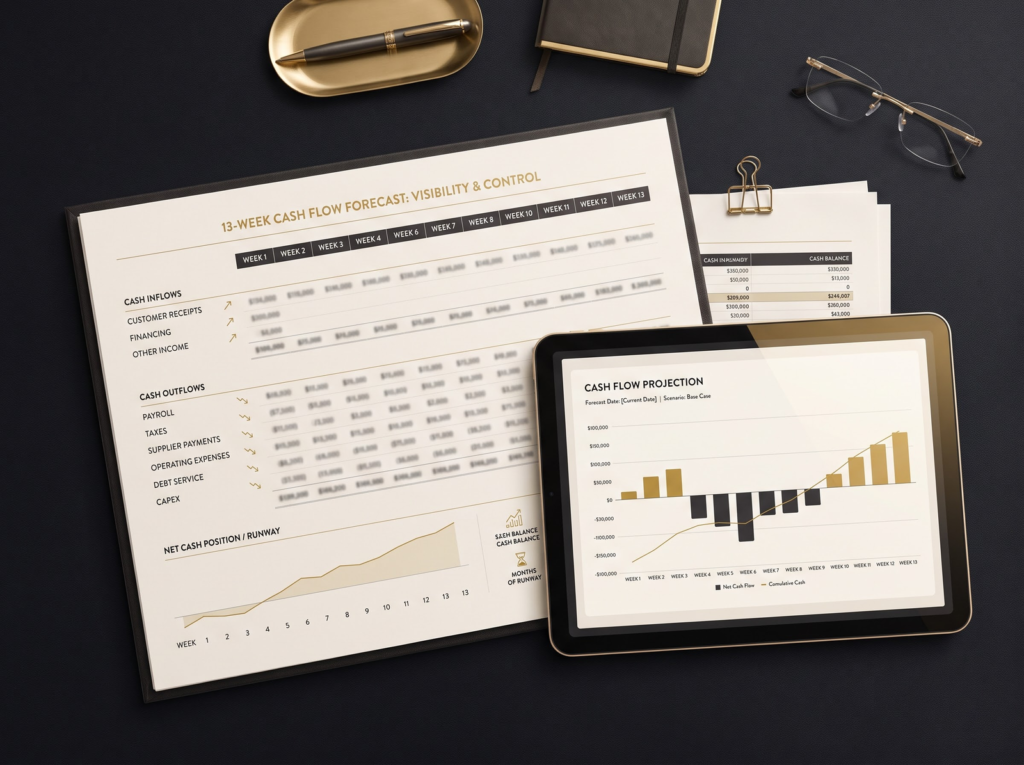
You can feel it before you can prove it. Sales look fine, the team is busy, yet something about the money side feels off. The topic of the 13-week cash flow forecast every founder should run sits at the center of that challenge for many US small business owners looking for better 13-week cash flow forecast and real fractional CFO support. Cash is the oxygen of a small business. Profit on paper does not pay payroll, rent, or suppliers. Many owners discover this the hard way when a big receivable is late or when inventory purchases stack up faster than sales convert. A living 13-week cash flow forecast forces the real timing of inflows and outflows into the open. You list expected collections by week, known bills, payroll, tax payments, and planned investments. The first time you build one honestly, gaps usually appear that the annual budget never showed. Once the forecast exists, the weekly habit of updating it takes less time than most people expect and pays for itself in avoided crises. Late-paying customers become visible early enough to start collection steps. Large purchases can be timed against known inflows. Hiring decisions can be tested against the cash runway instead of pure optimism. For e-commerce and inventory businesses the same tool highlights the cash locked in stock and the benefit of faster turns. Service firms see the impact of project billing terms and deposit practices. The goal is not perfect prediction. The goal is fewer surprises and more deliberate choices. This is exactly the kind of cash flow discipline a fractional CFO installs so you stop managing by bank balance alone. Proactive tax strategy is not about aggressive loopholes. It is about timing, entity structure, available credits, and making sure estimated payments and multi-state obligations do not create ugly surprises. This sits alongside cash flow forecasting and KPI reporting in a complete fractional CFO engagement. None of this requires hiring a full-time CFO at a full-time salary. The right fractional arrangement gives you the clarity and the process without the overhead that many growing companies cannot yet justify. Explore the full system on the SmallBiz CFO Program page. In practice the companies that install these habits earliest tend to raise capital on better terms when they need it, negotiate with suppliers from a position of knowledge, and avoid the expensive scramble that comes from discovering problems only when cash is already tight. The work is not glamorous. It is consistent and specific. But the compounding effect on decision quality is real. To see how bookkeeping, 13-week forecasting, KPI dashboards, and proactive tax strategy connect under one roof, visit the SmallBiz CFO Program page or book a confidential strategy call.
Why Most Growing Businesses Run Out of Cash Even When Sales Are Up

You can feel it before you can prove it. Sales look fine, the team is busy, yet something about the money side feels off. The topic of why most growing businesses run out of cash even when sales are up sits at the center of that challenge for many US small business owners looking for better cash flow forecasting for small business and real fractional CFO support. Cash is the oxygen of a small business. Profit on paper does not pay payroll, rent, or suppliers. Many owners discover this the hard way when a big receivable is late or when inventory purchases stack up faster than sales convert. A living 13-week cash flow forecast forces the real timing of inflows and outflows into the open. You list expected collections by week, known bills, payroll, tax payments, and planned investments. The first time you build one honestly, gaps usually appear that the annual budget never showed. Once the forecast exists, the weekly habit of updating it takes less time than most people expect and pays for itself in avoided crises. Late-paying customers become visible early enough to start collection steps. Large purchases can be timed against known inflows. Hiring decisions can be tested against the cash runway instead of pure optimism. For e-commerce and inventory businesses the same tool highlights the cash locked in stock and the benefit of faster turns. Service firms see the impact of project billing terms and deposit practices. The goal is not perfect prediction. The goal is fewer surprises and more deliberate choices. This is exactly the kind of cash flow discipline a fractional CFO installs so you stop managing by bank balance alone. Proactive tax strategy is not about aggressive loopholes. It is about timing, entity structure, available credits, and making sure estimated payments and multi-state obligations do not create ugly surprises. This sits alongside cash flow forecasting and KPI reporting in a complete fractional CFO engagement. Financial clarity is not a luxury reserved for large companies. It is a practical operating system that smaller teams can install and keep running. Start the conversation by choosing to book a confidential strategy call. In practice the companies that install these habits earliest tend to raise capital on better terms when they need it, negotiate with suppliers from a position of knowledge, and avoid the expensive scramble that comes from discovering problems only when cash is already tight. The work is not glamorous. It is consistent and specific. But the compounding effect on decision quality is real. To see how bookkeeping, 13-week forecasting, KPI dashboards, and proactive tax strategy connect under one roof, visit the SmallBiz CFO Program page or book a confidential strategy call.