

Why Most Financial Software Implementations Fail (and How to Avoid It)
You can feel it before you can prove it. Sales look fine, the team is busy, yet something about the money side feels off. The topic of why most financial software implementations fail (and how to avoid it) sits at the center of that challenge for many US small business owners looking for better accounting software implementation and real fractional CFO support. Cash is the oxygen of a small business. Profit on paper does not pay payroll, rent, or suppliers. Many owners discover this the hard way when a big receivable is late or when inventory purchases stack up faster than sales convert. A living 13-week cash flow forecast forces the real timing of inflows and outflows into the open. You list expected collections by week, known bills, payroll, tax payments, and planned investments. The first time you build one honestly, gaps usually appear that the annual budget never showed. Once the forecast exists, the weekly habit of updating it takes less time than most people expect and pays for itself in avoided crises. Late-paying customers become visible early enough to start collection steps. Large purchases can be timed against known inflows. Hiring decisions can be tested against the cash runway instead of pure optimism. For e-commerce and inventory businesses the same tool highlights the cash locked in stock and the benefit of faster turns. Service firms see the impact of project billing terms and deposit practices. The goal is not perfect prediction. The goal is fewer surprises and more deliberate choices. This is exactly the kind of cash flow discipline a fractional CFO installs so you stop managing by bank balance alone. New software rarely fails because of the technology. It fails because processes were never clarified, ownership was never assigned, and the chart of accounts was never cleaned. Starting with process design and data hygiene before the migration dramatically raises the odds that the new system actually improves decision speed instead of adding another layer of confusion. When the numbers need to become clearer and more actionable, book a confidential strategy call. In practice the companies that install these habits earliest tend to raise capital on better terms when they need it, negotiate with suppliers from a position of knowledge, and avoid the expensive scramble that comes from discovering problems only when cash is already tight. The work is not glamorous. It is consistent and specific. But the compounding effect on decision quality is real. To see how bookkeeping, 13-week forecasting, KPI dashboards, and proactive tax strategy connect under one roof, visit the SmallBiz CFO Program page or book a confidential strategy call.
The Financial Operating Rhythm That Keeps Growing Teams Aligned

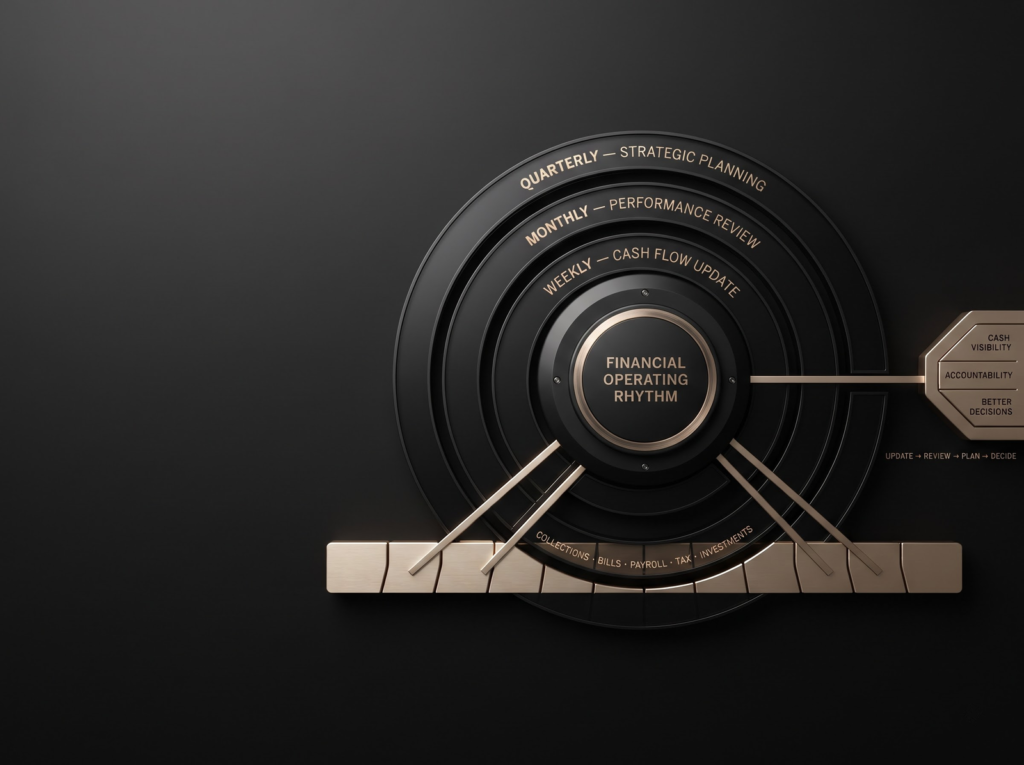
You can feel it before you can prove it. Sales look fine, the team is busy, yet something about the money side feels off. The topic of the financial operating rhythm that keeps growing teams aligned sits at the center of that challenge for many US small business owners looking for better financial operating rhythm and real fractional CFO support. Cash is the oxygen of a small business. Profit on paper does not pay payroll, rent, or suppliers. Many owners discover this the hard way when a big receivable is late or when inventory purchases stack up faster than sales convert. A living 13-week cash flow forecast forces the real timing of inflows and outflows into the open. You list expected collections by week, known bills, payroll, tax payments, and planned investments. The first time you build one honestly, gaps usually appear that the annual budget never showed. Once the forecast exists, the weekly habit of updating it takes less time than most people expect and pays for itself in avoided crises. Late-paying customers become visible early enough to start collection steps. Large purchases can be timed against known inflows. Hiring decisions can be tested against the cash runway instead of pure optimism. For e-commerce and inventory businesses the same tool highlights the cash locked in stock and the benefit of faster turns. Service firms see the impact of project billing terms and deposit practices. The goal is not perfect prediction. The goal is fewer surprises and more deliberate choices. This is exactly the kind of cash flow discipline a fractional CFO installs so you stop managing by bank balance alone. Weekly cash updates, monthly performance reviews, and quarterly planning sessions create a predictable cadence. When the same people look at the same numbers on a fixed schedule, surprises shrink and accountability becomes cultural rather than personal. Installing that rhythm is a core deliverable of effective fractional CFO support. None of this requires hiring a full-time CFO at a full-time salary. The right fractional arrangement gives you the clarity and the process without the overhead that many growing companies cannot yet justify. Explore the full system on the SmallBiz CFO Program page. In practice the companies that install these habits earliest tend to raise capital on better terms when they need it, negotiate with suppliers from a position of knowledge, and avoid the expensive scramble that comes from discovering problems only when cash is already tight. The work is not glamorous. It is consistent and specific. But the compounding effect on decision quality is real. To see how bookkeeping, 13-week forecasting, KPI dashboards, and proactive tax strategy connect under one roof, visit the SmallBiz CFO Program page or book a confidential strategy call.
How to Design Reporting That Matches How You Actually Run the Business

You can feel it before you can prove it. Sales look fine, the team is busy, yet something about the money side feels off. The topic of how to design reporting that matches how you actually run the business sits at the center of that challenge for many US small business owners looking for better management reporting design and real fractional CFO support. Cash is the oxygen of a small business. Profit on paper does not pay payroll, rent, or suppliers. Many owners discover this the hard way when a big receivable is late or when inventory purchases stack up faster than sales convert. A living 13-week cash flow forecast forces the real timing of inflows and outflows into the open. You list expected collections by week, known bills, payroll, tax payments, and planned investments. The first time you build one honestly, gaps usually appear that the annual budget never showed. Once the forecast exists, the weekly habit of updating it takes less time than most people expect and pays for itself in avoided crises. Late-paying customers become visible early enough to start collection steps. Large purchases can be timed against known inflows. Hiring decisions can be tested against the cash runway instead of pure optimism. For e-commerce and inventory businesses the same tool highlights the cash locked in stock and the benefit of faster turns. Service firms see the impact of project billing terms and deposit practices. The goal is not perfect prediction. The goal is fewer surprises and more deliberate choices. This is exactly the kind of cash flow discipline a fractional CFO installs so you stop managing by bank balance alone. Generic financial statements rarely answer the questions owners ask in real time. Custom management reports that mirror the way the business is actually managed—by channel, by project stage, by customer cohort—turn the accounting system into a decision engine. The design work is front-loaded; the payoff compounds every month. Financial clarity is not a luxury reserved for large companies. It is a practical operating system that smaller teams can install and keep running. Start the conversation by choosing to book a confidential strategy call. In practice the companies that install these habits earliest tend to raise capital on better terms when they need it, negotiate with suppliers from a position of knowledge, and avoid the expensive scramble that comes from discovering problems only when cash is already tight. The work is not glamorous. It is consistent and specific. But the compounding effect on decision quality is real. To see how bookkeeping, 13-week forecasting, KPI dashboards, and proactive tax strategy connect under one roof, visit the SmallBiz CFO Program page or book a confidential strategy call.
Creating a Single Source of Truth for Financial Data

You can feel it before you can prove it. Sales look fine, the team is busy, yet something about the money side feels off. The topic of creating a single source of truth for financial data sits at the center of that challenge for many US small business owners looking for better financial data single source of truth and real fractional CFO support. Cash is the oxygen of a small business. Profit on paper does not pay payroll, rent, or suppliers. Many owners discover this the hard way when a big receivable is late or when inventory purchases stack up faster than sales convert. A living 13-week cash flow forecast forces the real timing of inflows and outflows into the open. You list expected collections by week, known bills, payroll, tax payments, and planned investments. The first time you build one honestly, gaps usually appear that the annual budget never showed. Once the forecast exists, the weekly habit of updating it takes less time than most people expect and pays for itself in avoided crises. Late-paying customers become visible early enough to start collection steps. Large purchases can be timed against known inflows. Hiring decisions can be tested against the cash runway instead of pure optimism. For e-commerce and inventory businesses the same tool highlights the cash locked in stock and the benefit of faster turns. Service firms see the impact of project billing terms and deposit practices. The goal is not perfect prediction. The goal is fewer surprises and more deliberate choices. This is exactly the kind of cash flow discipline a fractional CFO installs so you stop managing by bank balance alone. When spreadsheets, the accounting system, and the CRM all tell slightly different stories, decisions slow down and trust erodes. Establishing one authoritative system for each data type, with clear hand-offs and reconciliation points, removes the weekly argument about whose numbers are right. Clarity here multiplies the value of every other financial habit. When the numbers need to become clearer and more actionable, book a confidential strategy call. In practice the companies that install these habits earliest tend to raise capital on better terms when they need it, negotiate with suppliers from a position of knowledge, and avoid the expensive scramble that comes from discovering problems only when cash is already tight. The work is not glamorous. It is consistent and specific. But the compounding effect on decision quality is real. To see how bookkeeping, 13-week forecasting, KPI dashboards, and proactive tax strategy connect under one roof, visit the SmallBiz CFO Program page or book a confidential strategy call.
Automating the Financial Workflows That Steal Owner Time

You can feel it before you can prove it. Sales look fine, the team is busy, yet something about the money side feels off. The topic of automating the financial workflows that steal owner time sits at the center of that challenge for many US small business owners looking for better financial process automation and real fractional CFO support. Cash is the oxygen of a small business. Profit on paper does not pay payroll, rent, or suppliers. Many owners discover this the hard way when a big receivable is late or when inventory purchases stack up faster than sales convert. A living 13-week cash flow forecast forces the real timing of inflows and outflows into the open. You list expected collections by week, known bills, payroll, tax payments, and planned investments. The first time you build one honestly, gaps usually appear that the annual budget never showed. Once the forecast exists, the weekly habit of updating it takes less time than most people expect and pays for itself in avoided crises. Late-paying customers become visible early enough to start collection steps. Large purchases can be timed against known inflows. Hiring decisions can be tested against the cash runway instead of pure optimism. For e-commerce and inventory businesses the same tool highlights the cash locked in stock and the benefit of faster turns. Service firms see the impact of project billing terms and deposit practices. The goal is not perfect prediction. The goal is fewer surprises and more deliberate choices. This is exactly the kind of cash flow discipline a fractional CFO installs so you stop managing by bank balance alone. Recurring tasks—invoice reminders, bank reconciliations, expense coding, recurring journal entries—should run without constant owner attention. The right mix of software rules, templates, and clear ownership frees leadership capacity while improving accuracy. Systems thinking turns busywork into reliable background processes. None of this requires hiring a full-time CFO at a full-time salary. The right fractional arrangement gives you the clarity and the process without the overhead that many growing companies cannot yet justify. Explore the full system on the SmallBiz CFO Program page. In practice the companies that install these habits earliest tend to raise capital on better terms when they need it, negotiate with suppliers from a position of knowledge, and avoid the expensive scramble that comes from discovering problems only when cash is already tight. The work is not glamorous. It is consistent and specific. But the compounding effect on decision quality is real. To see how bookkeeping, 13-week forecasting, KPI dashboards, and proactive tax strategy connect under one roof, visit the SmallBiz CFO Program page or book a confidential strategy call.
The Role of a Fractional CFO vs a Bookkeeper vs a CPA

You can feel it before you can prove it. Sales look fine, the team is busy, yet something about the money side feels off. The topic of the role of a fractional cfo vs a bookkeeper vs a cpa sits at the center of that challenge for many US small business owners looking for better fractional cfo vs bookkeeper vs cpa and real fractional CFO support. Cash is the oxygen of a small business. Profit on paper does not pay payroll, rent, or suppliers. Many owners discover this the hard way when a big receivable is late or when inventory purchases stack up faster than sales convert. A living 13-week cash flow forecast forces the real timing of inflows and outflows into the open. You list expected collections by week, known bills, payroll, tax payments, and planned investments. The first time you build one honestly, gaps usually appear that the annual budget never showed. Once the forecast exists, the weekly habit of updating it takes less time than most people expect and pays for itself in avoided crises. Late-paying customers become visible early enough to start collection steps. Large purchases can be timed against known inflows. Hiring decisions can be tested against the cash runway instead of pure optimism. For e-commerce and inventory businesses the same tool highlights the cash locked in stock and the benefit of faster turns. Service firms see the impact of project billing terms and deposit practices. The goal is not perfect prediction. The goal is fewer surprises and more deliberate choices. This is exactly the kind of cash flow discipline a fractional CFO installs so you stop managing by bank balance alone. Bookkeepers keep the records. CPAs handle compliance and tax returns. A fractional CFO owns the forward-looking systems: cash forecasting, KPI design, scenario planning, and the decision support that turns numbers into action. Understanding the three roles prevents gaps and expensive overlaps as the company grows. Financial clarity is not a luxury reserved for large companies. It is a practical operating system that smaller teams can install and keep running. Start the conversation by choosing to book a confidential strategy call. In practice the companies that install these habits earliest tend to raise capital on better terms when they need it, negotiate with suppliers from a position of knowledge, and avoid the expensive scramble that comes from discovering problems only when cash is already tight. The work is not glamorous. It is consistent and specific. But the compounding effect on decision quality is real. To see how bookkeeping, 13-week forecasting, KPI dashboards, and proactive tax strategy connect under one roof, visit the SmallBiz CFO Program page or book a confidential strategy call.
How to Build a Chart of Accounts That Scales With You

You can feel it before you can prove it. Sales look fine, the team is busy, yet something about the money side feels off. The topic of how to build a chart of accounts that scales with you sits at the center of that challenge for many US small business owners looking for better chart of accounts design and real fractional CFO support. Cash is the oxygen of a small business. Profit on paper does not pay payroll, rent, or suppliers. Many owners discover this the hard way when a big receivable is late or when inventory purchases stack up faster than sales convert. A living 13-week cash flow forecast forces the real timing of inflows and outflows into the open. You list expected collections by week, known bills, payroll, tax payments, and planned investments. The first time you build one honestly, gaps usually appear that the annual budget never showed. Once the forecast exists, the weekly habit of updating it takes less time than most people expect and pays for itself in avoided crises. Late-paying customers become visible early enough to start collection steps. Large purchases can be timed against known inflows. Hiring decisions can be tested against the cash runway instead of pure optimism. For e-commerce and inventory businesses the same tool highlights the cash locked in stock and the benefit of faster turns. Service firms see the impact of project billing terms and deposit practices. The goal is not perfect prediction. The goal is fewer surprises and more deliberate choices. This is exactly the kind of cash flow discipline a fractional CFO installs so you stop managing by bank balance alone. A messy chart of accounts creates permanent friction. Too many accounts bury insight; too few force constant workarounds. Designing the structure around the questions you actually ask—by department, by product family, by location—makes every report more useful and every close faster. Getting this right early saves years of cleanup later. None of this requires hiring a full-time CFO at a full-time salary. The right fractional arrangement gives you the clarity and the process without the overhead that many growing companies cannot yet justify. Explore the full system on the SmallBiz CFO Program page. In practice the companies that install these habits earliest tend to raise capital on better terms when they need it, negotiate with suppliers from a position of knowledge, and avoid the expensive scramble that comes from discovering problems only when cash is already tight. The work is not glamorous. It is consistent and specific. But the compounding effect on decision quality is real. To see how bookkeeping, 13-week forecasting, KPI dashboards, and proactive tax strategy connect under one roof, visit the SmallBiz CFO Program page or book a confidential strategy call.
KPI Dashboards That Owners Actually Open and Use

You can feel it before you can prove it. Sales look fine, the team is busy, yet something about the money side feels off. The topic of kpi dashboards that owners actually open and use sits at the center of that challenge for many US small business owners looking for better kpi dashboard small business and real fractional CFO support. Cash is the oxygen of a small business. Profit on paper does not pay payroll, rent, or suppliers. Many owners discover this the hard way when a big receivable is late or when inventory purchases stack up faster than sales convert. A living 13-week cash flow forecast forces the real timing of inflows and outflows into the open. You list expected collections by week, known bills, payroll, tax payments, and planned investments. The first time you build one honestly, gaps usually appear that the annual budget never showed. Once the forecast exists, the weekly habit of updating it takes less time than most people expect and pays for itself in avoided crises. Late-paying customers become visible early enough to start collection steps. Large purchases can be timed against known inflows. Hiring decisions can be tested against the cash runway instead of pure optimism. For e-commerce and inventory businesses the same tool highlights the cash locked in stock and the benefit of faster turns. Service firms see the impact of project billing terms and deposit practices. The goal is not perfect prediction. The goal is fewer surprises and more deliberate choices. This is exactly the kind of cash flow discipline a fractional CFO installs so you stop managing by bank balance alone. KPI dashboards only help when they are simple enough that you actually open them. The useful ones track a short list of drivers: cash position, gross margin, receivables aging, and the metrics that matter most in your specific model. The SmallBiz CFO Program builds exactly that kind of focused reporting. When the numbers need to become clearer and more actionable, book a confidential strategy call. In practice the companies that install these habits earliest tend to raise capital on better terms when they need it, negotiate with suppliers from a position of knowledge, and avoid the expensive scramble that comes from discovering problems only when cash is already tight. The work is not glamorous. It is consistent and specific. But the compounding effect on decision quality is real. To see how bookkeeping, 13-week forecasting, KPI dashboards, and proactive tax strategy connect under one roof, visit the SmallBiz CFO Program page or book a confidential strategy call.
The Monthly Close Process That Stops Financial Surprises
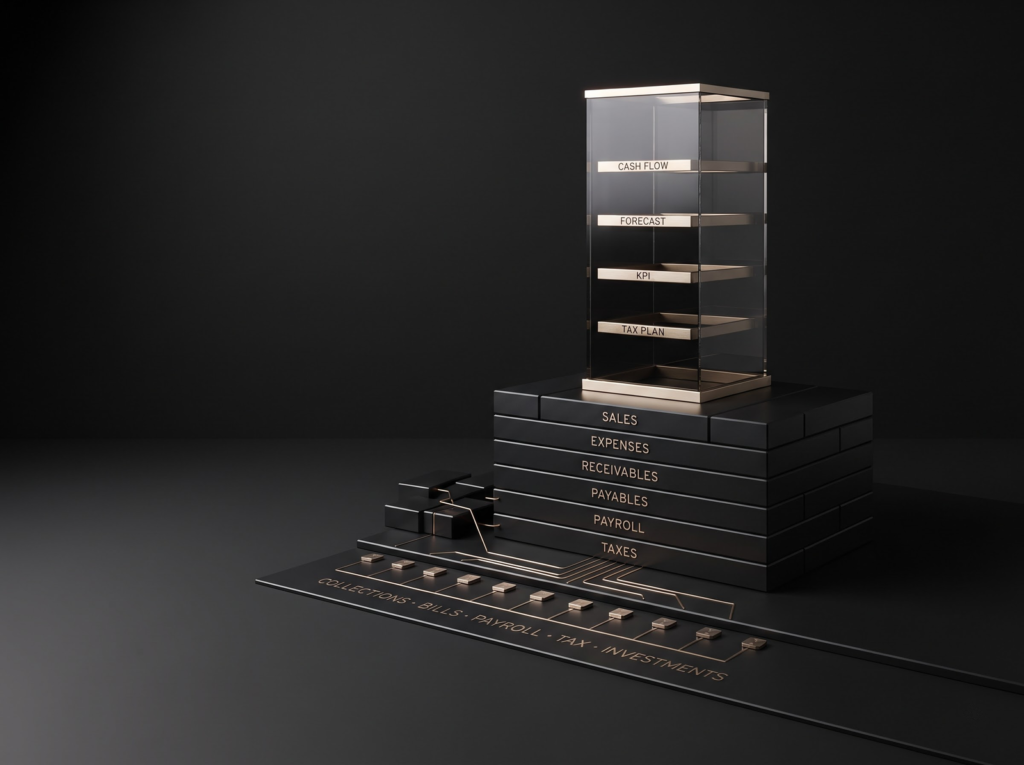
You can feel it before you can prove it. Sales look fine, the team is busy, yet something about the money side feels off. The topic of the monthly close process that stops financial surprises sits at the center of that challenge for many US small business owners looking for better monthly close process and real fractional CFO support. Cash is the oxygen of a small business. Profit on paper does not pay payroll, rent, or suppliers. Many owners discover this the hard way when a big receivable is late or when inventory purchases stack up faster than sales convert. A living 13-week cash flow forecast forces the real timing of inflows and outflows into the open. You list expected collections by week, known bills, payroll, tax payments, and planned investments. The first time you build one honestly, gaps usually appear that the annual budget never showed. Once the forecast exists, the weekly habit of updating it takes less time than most people expect and pays for itself in avoided crises. Late-paying customers become visible early enough to start collection steps. Large purchases can be timed against known inflows. Hiring decisions can be tested against the cash runway instead of pure optimism. For e-commerce and inventory businesses the same tool highlights the cash locked in stock and the benefit of faster turns. Service firms see the impact of project billing terms and deposit practices. The goal is not perfect prediction. The goal is fewer surprises and more deliberate choices. This is exactly the kind of cash flow discipline a fractional CFO installs so you stop managing by bank balance alone. A disciplined monthly close turns accounting from a historical chore into a management tool. When the books close on a fixed calendar with clear ownership and a short list of reconciling items, the numbers become trustworthy early enough to act on. This rhythm is one of the highest-leverage systems a growing company can install. None of this requires hiring a full-time CFO at a full-time salary. The right fractional arrangement gives you the clarity and the process without the overhead that many growing companies cannot yet justify. Explore the full system on the SmallBiz CFO Program page. In practice the companies that install these habits earliest tend to raise capital on better terms when they need it, negotiate with suppliers from a position of knowledge, and avoid the expensive scramble that comes from discovering problems only when cash is already tight. The work is not glamorous. It is consistent and specific. But the compounding effect on decision quality is real. To see how bookkeeping, 13-week forecasting, KPI dashboards, and proactive tax strategy connect under one roof, visit the SmallBiz CFO Program page or book a confidential strategy call.
Why Clean Books Are the Foundation of Every Good Decision

You can feel it before you can prove it. Sales look fine, the team is busy, yet something about the money side feels off. The topic of why clean books are the foundation of every good decision sits at the center of that challenge for many US small business owners looking for better clean bookkeeping small business and real fractional CFO support. Cash is the oxygen of a small business. Profit on paper does not pay payroll, rent, or suppliers. Many owners discover this the hard way when a big receivable is late or when inventory purchases stack up faster than sales convert. A living 13-week cash flow forecast forces the real timing of inflows and outflows into the open. You list expected collections by week, known bills, payroll, tax payments, and planned investments. The first time you build one honestly, gaps usually appear that the annual budget never showed. Once the forecast exists, the weekly habit of updating it takes less time than most people expect and pays for itself in avoided crises. Late-paying customers become visible early enough to start collection steps. Large purchases can be timed against known inflows. Hiring decisions can be tested against the cash runway instead of pure optimism. For e-commerce and inventory businesses the same tool highlights the cash locked in stock and the benefit of faster turns. Service firms see the impact of project billing terms and deposit practices. The goal is not perfect prediction. The goal is fewer surprises and more deliberate choices. This is exactly the kind of cash flow discipline a fractional CFO installs so you stop managing by bank balance alone. Clean books are the foundation. Without accurate, timely records, every forecast and every tax plan sits on shaky ground. That is why the SmallBiz CFO Program starts with getting the data right and keeping it right every month. Financial clarity is not a luxury reserved for large companies. It is a practical operating system that smaller teams can install and keep running. Start the conversation by choosing to book a confidential strategy call. In practice the companies that install these habits earliest tend to raise capital on better terms when they need it, negotiate with suppliers from a position of knowledge, and avoid the expensive scramble that comes from discovering problems only when cash is already tight. The work is not glamorous. It is consistent and specific. But the compounding effect on decision quality is real. To see how bookkeeping, 13-week forecasting, KPI dashboards, and proactive tax strategy connect under one roof, visit the SmallBiz CFO Program page or book a confidential strategy call.