
Turning Break-Even Analysis into a Practical Decision Tool
You can feel it before you can prove it. Sales look fine, the team is busy, yet something about the money side feels off. The topic of turning break-even analysis into a practical decision tool sits at the center of that challenge for many US small business owners looking for better break even analysis small business and real fractional CFO support. Cash is the oxygen of a small business. Profit on paper does not pay payroll, rent, or suppliers. Many owners discover this the hard way when a big receivable is late or when inventory purchases stack up faster than sales convert. A living 13-week cash flow forecast forces the real timing of inflows and outflows into the open. You list expected collections by week, known bills, payroll, tax payments, and planned investments. The first time you build one honestly, gaps usually appear that the annual budget never showed. Once the forecast exists, the weekly habit of updating it takes less time than most people expect and pays for itself in avoided crises. Late-paying customers become visible early enough to start collection steps. Large purchases can be timed against known inflows. Hiring decisions can be tested against the cash runway instead of pure optimism. For e-commerce and inventory businesses the same tool highlights the cash locked in stock and the benefit of faster turns. Service firms see the impact of project billing terms and deposit practices. The goal is not perfect prediction. The goal is fewer surprises and more deliberate choices. This is exactly the kind of cash flow discipline a fractional CFO installs so you stop managing by bank balance alone. Break-even is often treated as a one-time spreadsheet exercise. Updated monthly with real fixed costs, variable cost percentages, and current pricing, it becomes a live tool for evaluating new hires, marketing spend, and capacity decisions. Owners who keep it current stop guessing about how much room they actually have. When the numbers need to become clearer and more actionable, book a confidential strategy call. In practice the companies that install these habits earliest tend to raise capital on better terms when they need it, negotiate with suppliers from a position of knowledge, and avoid the expensive scramble that comes from discovering problems only when cash is already tight. The work is not glamorous. It is consistent and specific. But the compounding effect on decision quality is real. To see how bookkeeping, 13-week forecasting, KPI dashboards, and proactive tax strategy connect under one roof, visit the SmallBiz CFO Program page or book a confidential strategy call.
When to Cut a Product Line That Looks Busy but Loses Money

You can feel it before you can prove it. Sales look fine, the team is busy, yet something about the money side feels off. The topic of when to cut a product line that looks busy but loses money sits at the center of that challenge for many US small business owners looking for better product line profitability and real fractional CFO support. Cash is the oxygen of a small business. Profit on paper does not pay payroll, rent, or suppliers. Many owners discover this the hard way when a big receivable is late or when inventory purchases stack up faster than sales convert. A living 13-week cash flow forecast forces the real timing of inflows and outflows into the open. You list expected collections by week, known bills, payroll, tax payments, and planned investments. The first time you build one honestly, gaps usually appear that the annual budget never showed. Once the forecast exists, the weekly habit of updating it takes less time than most people expect and pays for itself in avoided crises. Late-paying customers become visible early enough to start collection steps. Large purchases can be timed against known inflows. Hiring decisions can be tested against the cash runway instead of pure optimism. For e-commerce and inventory businesses the same tool highlights the cash locked in stock and the benefit of faster turns. Service firms see the impact of project billing terms and deposit practices. The goal is not perfect prediction. The goal is fewer surprises and more deliberate choices. This is exactly the kind of cash flow discipline a fractional CFO installs so you stop managing by bank balance alone. Busy does not equal profitable. Product lines that absorb disproportionate inventory, support time, or returns can drag the whole company even while the top line looks healthy. Regular product-level margin reviews, including allocated costs that matter, give you the courage to prune and the data to defend the decision. None of this requires hiring a full-time CFO at a full-time salary. The right fractional arrangement gives you the clarity and the process without the overhead that many growing companies cannot yet justify. Explore the full system on the SmallBiz CFO Program page. In practice the companies that install these habits earliest tend to raise capital on better terms when they need it, negotiate with suppliers from a position of knowledge, and avoid the expensive scramble that comes from discovering problems only when cash is already tight. The work is not glamorous. It is consistent and specific. But the compounding effect on decision quality is real. To see how bookkeeping, 13-week forecasting, KPI dashboards, and proactive tax strategy connect under one roof, visit the SmallBiz CFO Program page or book a confidential strategy call.
The Profitability Dashboard Every Owner Should Review Monthly

You can feel it before you can prove it. Sales look fine, the team is busy, yet something about the money side feels off. The topic of the profitability dashboard every owner should review monthly sits at the center of that challenge for many US small business owners looking for better profitability dashboard and real fractional CFO support. Cash is the oxygen of a small business. Profit on paper does not pay payroll, rent, or suppliers. Many owners discover this the hard way when a big receivable is late or when inventory purchases stack up faster than sales convert. A living 13-week cash flow forecast forces the real timing of inflows and outflows into the open. You list expected collections by week, known bills, payroll, tax payments, and planned investments. The first time you build one honestly, gaps usually appear that the annual budget never showed. Once the forecast exists, the weekly habit of updating it takes less time than most people expect and pays for itself in avoided crises. Late-paying customers become visible early enough to start collection steps. Large purchases can be timed against known inflows. Hiring decisions can be tested against the cash runway instead of pure optimism. For e-commerce and inventory businesses the same tool highlights the cash locked in stock and the benefit of faster turns. Service firms see the impact of project billing terms and deposit practices. The goal is not perfect prediction. The goal is fewer surprises and more deliberate choices. This is exactly the kind of cash flow discipline a fractional CFO installs so you stop managing by bank balance alone. Most owners have too many reports and not enough insight. A tight monthly view of gross margin, contribution margin, operating expense ratio, and cash conversion cycle surfaces the few levers that actually move results. The SmallBiz CFO Program builds exactly this kind of focused, decision-ready reporting rather than more noise. Financial clarity is not a luxury reserved for large companies. It is a practical operating system that smaller teams can install and keep running. Start the conversation by choosing to book a confidential strategy call. In practice the companies that install these habits earliest tend to raise capital on better terms when they need it, negotiate with suppliers from a position of knowledge, and avoid the expensive scramble that comes from discovering problems only when cash is already tight. The work is not glamorous. It is consistent and specific. But the compounding effect on decision quality is real. To see how bookkeeping, 13-week forecasting, KPI dashboards, and proactive tax strategy connect under one roof, visit the SmallBiz CFO Program page or book a confidential strategy call.
How Overhead Creep Quietly Eats the Profits You Just Earned

You can feel it before you can prove it. Sales look fine, the team is busy, yet something about the money side feels off. The topic of how overhead creep quietly eats the profits you just earned sits at the center of that challenge for many US small business owners looking for better overhead control small business and real fractional CFO support. Cash is the oxygen of a small business. Profit on paper does not pay payroll, rent, or suppliers. Many owners discover this the hard way when a big receivable is late or when inventory purchases stack up faster than sales convert. A living 13-week cash flow forecast forces the real timing of inflows and outflows into the open. You list expected collections by week, known bills, payroll, tax payments, and planned investments. The first time you build one honestly, gaps usually appear that the annual budget never showed. Once the forecast exists, the weekly habit of updating it takes less time than most people expect and pays for itself in avoided crises. Late-paying customers become visible early enough to start collection steps. Large purchases can be timed against known inflows. Hiring decisions can be tested against the cash runway instead of pure optimism. For e-commerce and inventory businesses the same tool highlights the cash locked in stock and the benefit of faster turns. Service firms see the impact of project billing terms and deposit practices. The goal is not perfect prediction. The goal is fewer surprises and more deliberate choices. This is exactly the kind of cash flow discipline a fractional CFO installs so you stop managing by bank balance alone. Revenue growth often masks rising fixed costs until a slowdown exposes the problem. Tracking overhead as a percentage of contribution margin, and reviewing headcount and tool spend against clear capacity metrics, keeps the cost base honest. Early visibility prevents the painful catch-up cuts that damage culture and momentum. When the numbers need to become clearer and more actionable, book a confidential strategy call. In practice the companies that install these habits earliest tend to raise capital on better terms when they need it, negotiate with suppliers from a position of knowledge, and avoid the expensive scramble that comes from discovering problems only when cash is already tight. The work is not glamorous. It is consistent and specific. But the compounding effect on decision quality is real. To see how bookkeeping, 13-week forecasting, KPI dashboards, and proactive tax strategy connect under one roof, visit the SmallBiz CFO Program page or book a confidential strategy call.
Building a Pricing System That Protects Margin as You Scale

You can feel it before you can prove it. Sales look fine, the team is busy, yet something about the money side feels off. The topic of building a pricing system that protects margin as you scale sits at the center of that challenge for many US small business owners looking for better pricing system for growth and real fractional CFO support. Cash is the oxygen of a small business. Profit on paper does not pay payroll, rent, or suppliers. Many owners discover this the hard way when a big receivable is late or when inventory purchases stack up faster than sales convert. A living 13-week cash flow forecast forces the real timing of inflows and outflows into the open. You list expected collections by week, known bills, payroll, tax payments, and planned investments. The first time you build one honestly, gaps usually appear that the annual budget never showed. Once the forecast exists, the weekly habit of updating it takes less time than most people expect and pays for itself in avoided crises. Late-paying customers become visible early enough to start collection steps. Large purchases can be timed against known inflows. Hiring decisions can be tested against the cash runway instead of pure optimism. For e-commerce and inventory businesses the same tool highlights the cash locked in stock and the benefit of faster turns. Service firms see the impact of project billing terms and deposit practices. The goal is not perfect prediction. The goal is fewer surprises and more deliberate choices. This is exactly the kind of cash flow discipline a fractional CFO installs so you stop managing by bank balance alone. Ad-hoc pricing works until volume and complexity make exceptions the norm. A simple pricing architecture—floor prices, target margins, approval rules, and periodic reviews—keeps margin discipline intact as the team grows. The fractional CFO role is to install that architecture and the reporting that shows whether it is still holding. None of this requires hiring a full-time CFO at a full-time salary. The right fractional arrangement gives you the clarity and the process without the overhead that many growing companies cannot yet justify. Explore the full system on the SmallBiz CFO Program page. In practice the companies that install these habits earliest tend to raise capital on better terms when they need it, negotiate with suppliers from a position of knowledge, and avoid the expensive scramble that comes from discovering problems only when cash is already tight. The work is not glamorous. It is consistent and specific. But the compounding effect on decision quality is real. To see how bookkeeping, 13-week forecasting, KPI dashboards, and proactive tax strategy connect under one roof, visit the SmallBiz CFO Program page or book a confidential strategy call.
Why Some High-Revenue Clients Quietly Destroy Profitability

You can feel it before you can prove it. Sales look fine, the team is busy, yet something about the money side feels off. The topic of why some high-revenue clients quietly destroy profitability sits at the center of that challenge for many US small business owners looking for better unprofitable customers and real fractional CFO support. Cash is the oxygen of a small business. Profit on paper does not pay payroll, rent, or suppliers. Many owners discover this the hard way when a big receivable is late or when inventory purchases stack up faster than sales convert. A living 13-week cash flow forecast forces the real timing of inflows and outflows into the open. You list expected collections by week, known bills, payroll, tax payments, and planned investments. The first time you build one honestly, gaps usually appear that the annual budget never showed. Once the forecast exists, the weekly habit of updating it takes less time than most people expect and pays for itself in avoided crises. Late-paying customers become visible early enough to start collection steps. Large purchases can be timed against known inflows. Hiring decisions can be tested against the cash runway instead of pure optimism. For e-commerce and inventory businesses the same tool highlights the cash locked in stock and the benefit of faster turns. Service firms see the impact of project billing terms and deposit practices. The goal is not perfect prediction. The goal is fewer surprises and more deliberate choices. This is exactly the kind of cash flow discipline a fractional CFO installs so you stop managing by bank balance alone. Revenue concentration feels safe until you calculate true profitability by account. High-touch clients, slow payers, and custom-work heavy accounts often consume more support and working capital than the top-line suggests. Segment profitability analysis turns gut feel into evidence so you can reprice, reshape, or gracefully exit the relationships that drain the business. Financial clarity is not a luxury reserved for large companies. It is a practical operating system that smaller teams can install and keep running. Start the conversation by choosing to book a confidential strategy call. In practice the companies that install these habits earliest tend to raise capital on better terms when they need it, negotiate with suppliers from a position of knowledge, and avoid the expensive scramble that comes from discovering problems only when cash is already tight. The work is not glamorous. It is consistent and specific. But the compounding effect on decision quality is real. To see how bookkeeping, 13-week forecasting, KPI dashboards, and proactive tax strategy connect under one roof, visit the SmallBiz CFO Program page or book a confidential strategy call.
Contribution Margin vs Gross Margin: Which One Should Drive Decisions

You can feel it before you can prove it. Sales look fine, the team is busy, yet something about the money side feels off. The topic of contribution margin vs gross margin: which one should drive decisions sits at the center of that challenge for many US small business owners looking for better contribution margin vs gross margin and real fractional CFO support. Cash is the oxygen of a small business. Profit on paper does not pay payroll, rent, or suppliers. Many owners discover this the hard way when a big receivable is late or when inventory purchases stack up faster than sales convert. A living 13-week cash flow forecast forces the real timing of inflows and outflows into the open. You list expected collections by week, known bills, payroll, tax payments, and planned investments. The first time you build one honestly, gaps usually appear that the annual budget never showed. Once the forecast exists, the weekly habit of updating it takes less time than most people expect and pays for itself in avoided crises. Late-paying customers become visible early enough to start collection steps. Large purchases can be timed against known inflows. Hiring decisions can be tested against the cash runway instead of pure optimism. For e-commerce and inventory businesses the same tool highlights the cash locked in stock and the benefit of faster turns. Service firms see the impact of project billing terms and deposit practices. The goal is not perfect prediction. The goal is fewer surprises and more deliberate choices. This is exactly the kind of cash flow discipline a fractional CFO installs so you stop managing by bank balance alone. Gross margin tells you about the product. Contribution margin tells you about the decision. When variable costs beyond COGS (shipping, commissions, payment fees, packaging) are material, contribution margin becomes the more honest number for pricing, promotion, and channel choices. A focused KPI set keeps both in view without drowning the team in data. None of this requires hiring a full-time CFO at a full-time salary. The right fractional arrangement gives you the clarity and the process without the overhead that many growing companies cannot yet justify. Explore the full system on the SmallBiz CFO Program page. In practice the companies that install these habits earliest tend to raise capital on better terms when they need it, negotiate with suppliers from a position of knowledge, and avoid the expensive scramble that comes from discovering problems only when cash is already tight. The work is not glamorous. It is consistent and specific. But the compounding effect on decision quality is real. To see how bookkeeping, 13-week forecasting, KPI dashboards, and proactive tax strategy connect under one roof, visit the SmallBiz CFO Program page or book a confidential strategy call.
The Hidden Cost of Discounting That Never Shows Up in the P&L

You can feel it before you can prove it. Sales look fine, the team is busy, yet something about the money side feels off. The topic of the hidden cost of discounting that never shows up in the p&l sits at the center of that challenge for many US small business owners looking for better discounting impact on profit and real fractional CFO support. Cash is the oxygen of a small business. Profit on paper does not pay payroll, rent, or suppliers. Many owners discover this the hard way when a big receivable is late or when inventory purchases stack up faster than sales convert. A living 13-week cash flow forecast forces the real timing of inflows and outflows into the open. You list expected collections by week, known bills, payroll, tax payments, and planned investments. The first time you build one honestly, gaps usually appear that the annual budget never showed. Once the forecast exists, the weekly habit of updating it takes less time than most people expect and pays for itself in avoided crises. Late-paying customers become visible early enough to start collection steps. Large purchases can be timed against known inflows. Hiring decisions can be tested against the cash runway instead of pure optimism. For e-commerce and inventory businesses the same tool highlights the cash locked in stock and the benefit of faster turns. Service firms see the impact of project billing terms and deposit practices. The goal is not perfect prediction. The goal is fewer surprises and more deliberate choices. This is exactly the kind of cash flow discipline a fractional CFO installs so you stop managing by bank balance alone. Discounts often look like a volume play until you measure the margin they destroy and the precedent they set. Tracking discount frequency, average discount depth, and the recovery rate after promotions exposes whether the strategy is buying growth or quietly eroding value. Clean reporting makes those trade-offs visible in time to correct them. When the numbers need to become clearer and more actionable, book a confidential strategy call. In practice the companies that install these habits earliest tend to raise capital on better terms when they need it, negotiate with suppliers from a position of knowledge, and avoid the expensive scramble that comes from discovering problems only when cash is already tight. The work is not glamorous. It is consistent and specific. But the compounding effect on decision quality is real. To see how bookkeeping, 13-week forecasting, KPI dashboards, and proactive tax strategy connect under one roof, visit the SmallBiz CFO Program page or book a confidential strategy call.
How to Raise Prices Without Losing Your Best Customers

You can feel it before you can prove it. Sales look fine, the team is busy, yet something about the money side feels off. The topic of how to raise prices without losing your best customers sits at the center of that challenge for many US small business owners looking for better raising prices small business and real fractional CFO support. Cash is the oxygen of a small business. Profit on paper does not pay payroll, rent, or suppliers. Many owners discover this the hard way when a big receivable is late or when inventory purchases stack up faster than sales convert. A living 13-week cash flow forecast forces the real timing of inflows and outflows into the open. You list expected collections by week, known bills, payroll, tax payments, and planned investments. The first time you build one honestly, gaps usually appear that the annual budget never showed. Once the forecast exists, the weekly habit of updating it takes less time than most people expect and pays for itself in avoided crises. Late-paying customers become visible early enough to start collection steps. Large purchases can be timed against known inflows. Hiring decisions can be tested against the cash runway instead of pure optimism. For e-commerce and inventory businesses the same tool highlights the cash locked in stock and the benefit of faster turns. Service firms see the impact of project billing terms and deposit practices. The goal is not perfect prediction. The goal is fewer surprises and more deliberate choices. This is exactly the kind of cash flow discipline a fractional CFO installs so you stop managing by bank balance alone. Price increases feel risky until you see the real cost of underpricing. When you understand contribution margin by customer segment and the true cost of serving each account, selective increases become a clarity exercise rather than a gamble. The right financial systems turn pricing into a repeatable process instead of an annual argument. Financial clarity is not a luxury reserved for large companies. It is a practical operating system that smaller teams can install and keep running. Start the conversation by choosing to book a confidential strategy call. In practice the companies that install these habits earliest tend to raise capital on better terms when they need it, negotiate with suppliers from a position of knowledge, and avoid the expensive scramble that comes from discovering problems only when cash is already tight. The work is not glamorous. It is consistent and specific. But the compounding effect on decision quality is real. To see how bookkeeping, 13-week forecasting, KPI dashboards, and proactive tax strategy connect under one roof, visit the SmallBiz CFO Program page or book a confidential strategy call.
Why Gross Margin Is the Number That Actually Predicts Survival
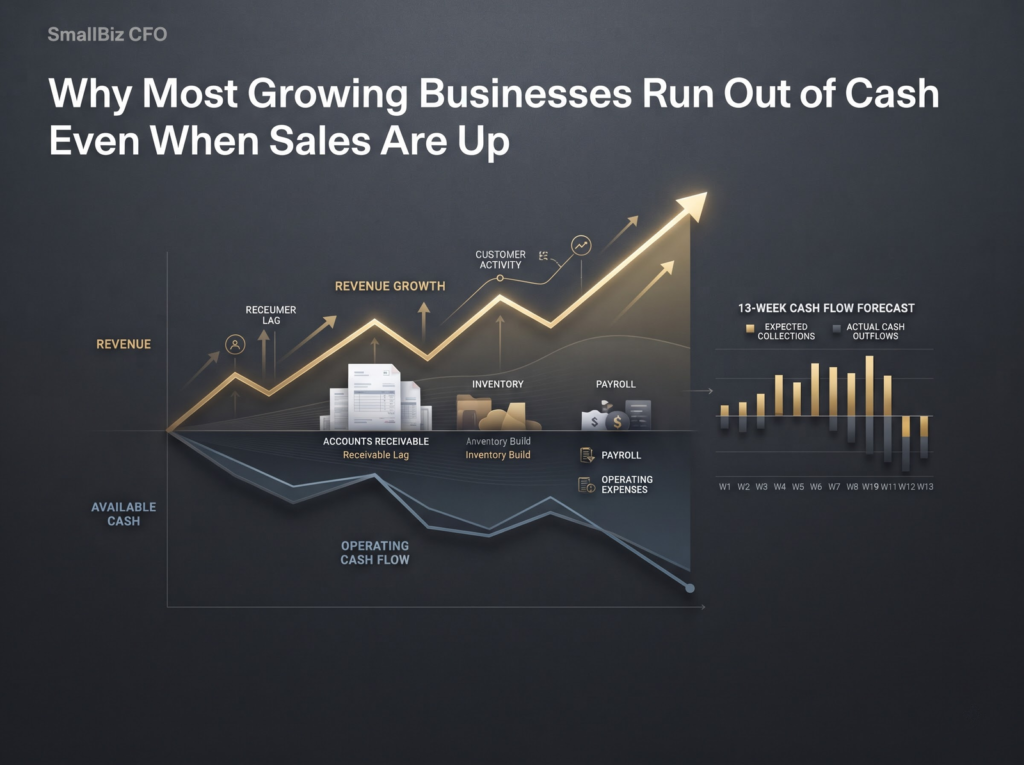
You can feel it before you can prove it. Sales look fine, the team is busy, yet something about the money side feels off. The topic of why gross margin is the number that actually predicts survival sits at the center of that challenge for many US small business owners looking for better gross margin small business and real fractional CFO support. Cash is the oxygen of a small business. Profit on paper does not pay payroll, rent, or suppliers. Many owners discover this the hard way when a big receivable is late or when inventory purchases stack up faster than sales convert. A living 13-week cash flow forecast forces the real timing of inflows and outflows into the open. You list expected collections by week, known bills, payroll, tax payments, and planned investments. The first time you build one honestly, gaps usually appear that the annual budget never showed. Once the forecast exists, the weekly habit of updating it takes less time than most people expect and pays for itself in avoided crises. Late-paying customers become visible early enough to start collection steps. Large purchases can be timed against known inflows. Hiring decisions can be tested against the cash runway instead of pure optimism. For e-commerce and inventory businesses the same tool highlights the cash locked in stock and the benefit of faster turns. Service firms see the impact of project billing terms and deposit practices. The goal is not perfect prediction. The goal is fewer surprises and more deliberate choices. This is exactly the kind of cash flow discipline a fractional CFO installs so you stop managing by bank balance alone. Gross margin reveals whether the core business model works before overhead and growth spending distort the picture. Many owners track revenue and net profit but miss the early warning that margin compression sends. A fractional CFO builds simple margin dashboards by product, customer, or channel so you can protect the engine that funds everything else. None of this requires hiring a full-time CFO at a full-time salary. The right fractional arrangement gives you the clarity and the process without the overhead that many growing companies cannot yet justify. Explore the full system on the SmallBiz CFO Program page. In practice the companies that install these habits earliest tend to raise capital on better terms when they need it, negotiate with suppliers from a position of knowledge, and avoid the expensive scramble that comes from discovering problems only when cash is already tight. The work is not glamorous. It is consistent and specific. But the compounding effect on decision quality is real. To see how bookkeeping, 13-week forecasting, KPI dashboards, and proactive tax strategy connect under one roof, visit the SmallBiz CFO Program page or book a confidential strategy call.